Secure Messaging App Telegram Review 2026: Advanced Features but Critical Privacy Concerns
Executive Overview on Secure Messaging App
In an increasingly surveillance driven digital ecosystem, selecting a secure messaging app requires careful evaluation of encryption architecture, metadata policies, infrastructure transparency, and data storage mechanisms. While many communication platforms market themselves as privacy oriented, their technical implementation often tells a different story.
Telegram has positioned itself as a privacy conscious alternative to mainstream messaging platforms. With hundreds of millions of active users and a reputation for speed and scalability, it is frequently considered a strong competitor in the secure communication space. However, the key question remains: does Telegram’s technical infrastructure truly justify its reputation as a secure messaging app, or do its architectural choices introduce significant privacy trade offs?
This review provides a detailed security analysis of Telegram’s encryption protocols, cloud infrastructure, privacy policies, feature ecosystem, and associated risks.
Platform Architecture and Operational Model
Telegram operates on a cloud based messaging infrastructure. Unlike fully device encrypted platforms, Telegram synchronizes conversations across its distributed global server network. This allows users to access their complete chat history from multiple devices without manual backup processes.
From a usability perspective, this architecture delivers seamless cross device continuity. However, from a security standpoint, cloud centric data storage expands the potential attack surface compared to platforms that minimize server side message retention.
Understanding this structural distinction is critical when evaluating Telegram’s security posture.
Encryption Framework and Protocol Evaluation
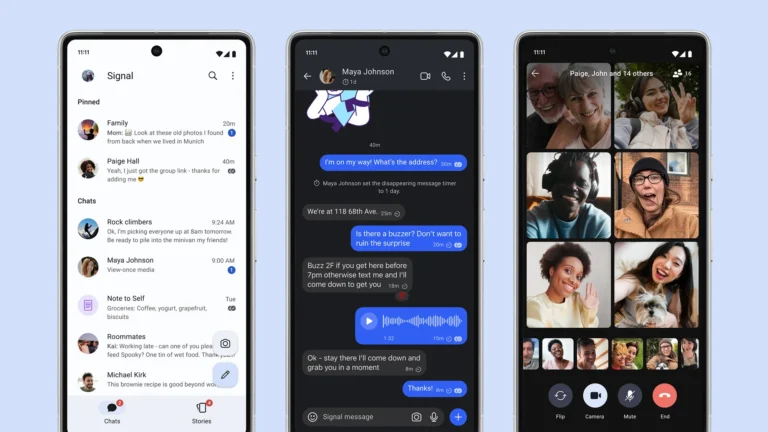
Telegram’s encryption model differs significantly from platforms such as Signal. Standard Telegram chats use server client encryption, meaning data is encrypted between the user’s device and Telegram’s servers. However, these conversations are not end to end encrypted by default.
End to end encryption is available exclusively through Secret Chats. Secret Chats must be manually initiated and function only on the originating device. They do not support cloud synchronization or multi device access.
This implementation creates a two tier security environment. Users who do not actively enable Secret Chats operate under a different security model than they may assume. In contrast, platforms like WhatsApp apply end to end encryption automatically to standard personal conversations, although ownership by Meta introduces separate metadata concerns.
Telegram’s optional encryption approach requires higher user awareness to maintain maximum privacy.
Cloud Storage Implications and Risk Assessment
Telegram’s cloud architecture enables unlimited chat history storage, rapid synchronization, and high performance scalability. These advantages make the platform attractive for business communities, digital broadcasters, and large scale group administrators.
However, centralized storage of standard chats means that message data resides on Telegram’s infrastructure. Even with encryption layers in place, server side data retention inherently carries higher theoretical exposure risk than minimal storage models.
For everyday users, this may present negligible practical risk. For high sensitivity communications involving confidential business information, activism, or investigative journalism, this structural distinction becomes significantly more relevant.
Data Collection Practices and Privacy Transparency
Telegram requires phone number verification for account registration. The platform may collect device identifiers, IP addresses, and basic usage logs for operational and security purposes. Compared to advertising driven ecosystems, Telegram’s data monetization strategy remains relatively restrained.
Unlike Meta owned platforms, Telegram’s revenue model does not primarily rely on behavioral data profiling. However, the introduction of sponsored messages in public channels indicates gradual monetization evolution.
Telegram has publicly emphasized its resistance to certain governmental data requests, which has strengthened its public privacy image. Nevertheless, transparency around server side encryption handling is less extensive than fully open source frameworks such as Signal.
Feature Ecosystem and Functional Superiority
From a functional perspective, Telegram offers one of the most comprehensive feature ecosystems among messaging platforms. It supports groups of up to 200,000 members, unlimited broadcast channels, advanced automation bots, file transfers up to 2GB, customizable themes, and integrated polling systems.
These capabilities extend Telegram beyond a simple communication tool into a large scale digital communication infrastructure. For entrepreneurs, content creators, educators, and global communities, this scalability provides significant operational advantages.
The platform’s performance is consistently stable, with fast message delivery and smooth multi device integration.
Security Vulnerabilities and Behavioral Risk Factors
The primary vulnerability associated with Telegram lies not in encryption weakness, but in user misunderstanding. Because end to end encryption is not enabled by default, many users operate under a false assumption of maximum privacy.
Additionally, Telegram’s open group and channel structure increases exposure to phishing links, scams, and malicious content distribution. Large scale public communities require proactive moderation to mitigate these risks.
Account security also depends on enabling two step verification and device level protections. Without these safeguards, unauthorized account access could expose cloud stored chat history.
Comparative Security Positioning
When compared with Signal, Telegram offers superior scalability and community management tools but weaker default encryption standards. When compared with WhatsApp, Telegram provides more customization and broadcasting flexibility but lacks universal end to end encryption enforcement.
Each platform reflects a different balance between privacy rigor and functional versatility. Telegram prioritizes flexibility and scalability, sometimes at the expense of automatic privacy enforcement.
Professional Use Case Evaluation
Secure Messaging app Telegram is particularly suitable for organizations managing large digital audiences, educational institutions distributing content, and startups leveraging automated bot systems. It performs exceptionally well for public communication and large scale interaction.
However, for confidential executive discussions, legal communications, or high risk investigative reporting, platforms with mandatory end to end encryption across all chats may present a stronger security profile.
Final Professional Assessment
Telegram represents a technologically advanced secure messaging app option with impressive scalability and operational flexibility. Its cloud based infrastructure enhances convenience and performance, but introduces structural privacy trade offs that must be understood clearly.
While Secret Chats offer strong encryption, their optional nature limits universal privacy enforcement. Users must take deliberate action to achieve maximum protection.
Telegram is secure for general communication and community management. However, its architecture prevents it from ranking among the highest tier privacy platforms designed specifically for confidential communication.
Overall Safety Rating: 7.5 out of 10
Secure Messaging app Telegram earns a respectable safety rating for its encryption capabilities, account security tools, and infrastructure robustness. However, the absence of default end to end encryption for standard chats prevents it from achieving elite privacy classification.
About the Author