Comprehensive Signal app review 2026 with detailed security insights, encryption analysis, privacy policy breakdown, pros and cons, and final safety rating. Is Signal the safest messaging app?
Introduction: Why Secure Messaging Matters More Than Ever
In today’s digital landscape, privacy is no longer optional it is essential. Messaging apps have become central to our personal and professional communication, yet many of them collect large amounts of user data. Concerns over surveillance, hacking, and data misuse have pushed users to seek safer alternatives. Among privacy-focused messaging platforms, Signal consistently stands out as a top recommendation. But does it truly deserve the title of the safest messaging app in 2026? This in-depth review analyzes Signal’s security framework, privacy practices, features, limitations, and overall safety score.
What Is Signal and How Does It Work?
Signal is a free, encrypted messaging application available for Android, iOS, Windows, macOS, and Linux. Unlike many competitors, Signal operates under a nonprofit model, meaning it does not rely on advertisements or user data monetization. Its core mission is simple: provide private communication without compromise.
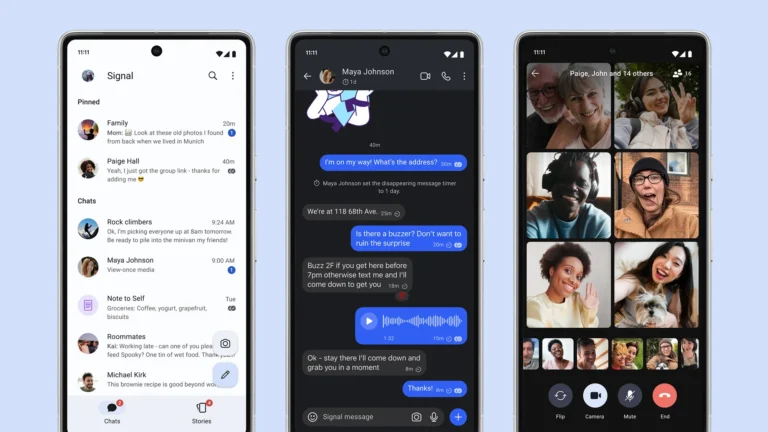
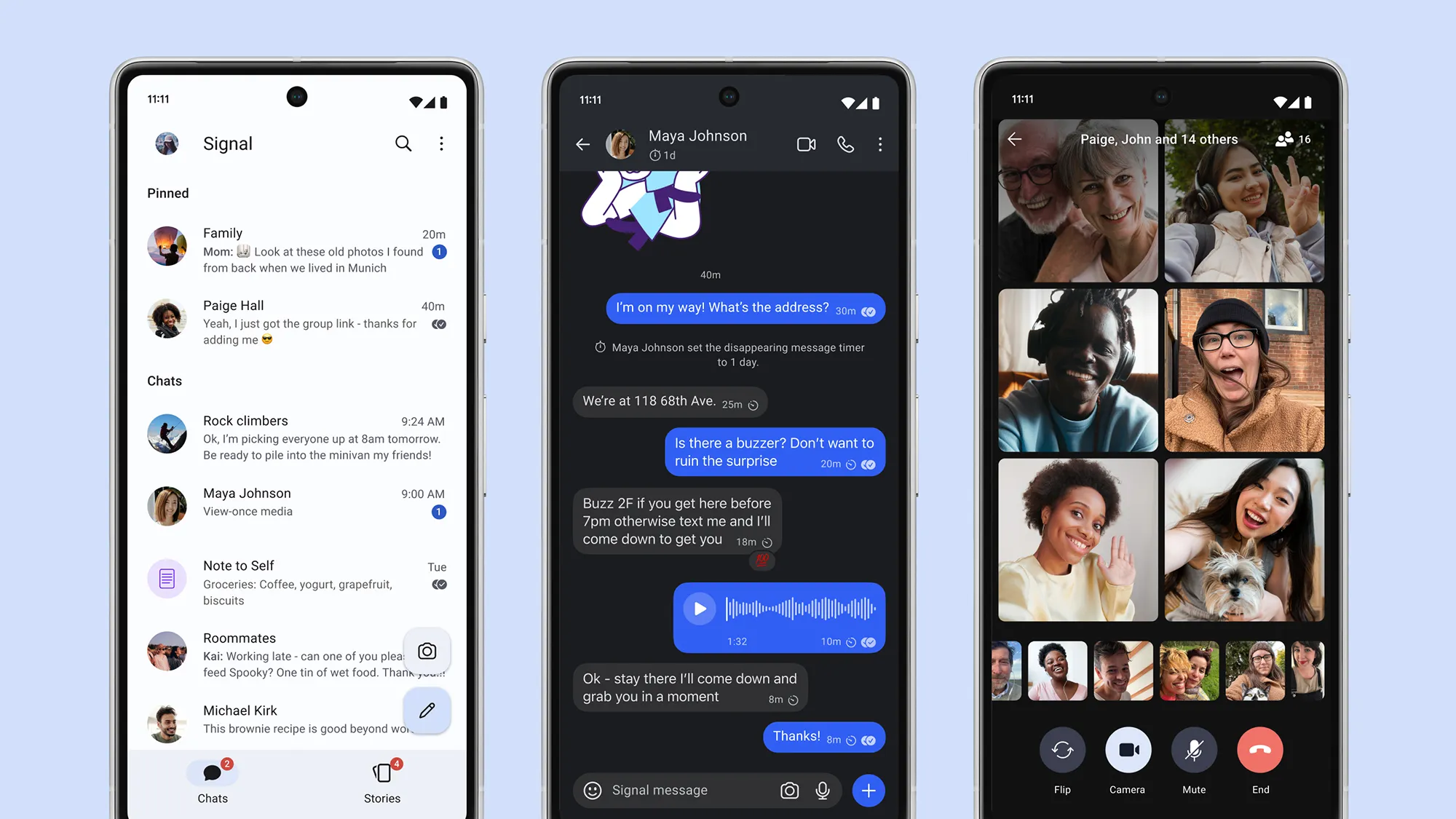
The app functions similarly to other messaging platforms, allowing users to send texts, voice notes, photos, videos, documents, and make voice or video calls. However, what differentiates Signal is its strict privacy-first architecture.
End-to-End Encryption: Signal’s Core Strength
Signal uses end-to-end encryption by default for all communications. This means that messages are encrypted on the sender’s device and can only be decrypted by the recipient’s device. Even Signal’s servers cannot read user conversations.
The encryption system behind Signal is the renowned Signal Protocol, which is also used by WhatsApp for its encrypted chats. The protocol provides forward secrecy, ensuring that if one encryption key is compromised, past messages remain protected. It also includes secure key exchange and cryptographic verification to prevent tampering.
Unlike some platforms such as Telegram, where encryption is optional for certain chats, Signal applies strong encryption automatically without requiring additional user settings.
Data Collection and Privacy Policy Breakdown
One of Signal’s biggest advantages is its minimal data collection policy. Many messaging apps collect metadata such as contact lists, device information, IP addresses, and behavioral patterns. Signal collects almost none of this information.
Publicly available transparency reports indicate that Signal typically stores only the phone number used to register, the date the account was created, and the last connection timestamp. It does not store chat logs, contact graphs, or message content on its servers.
This minimal data retention policy significantly reduces exposure in the event of data requests or breaches. Since there is little data stored, there is little data to compromise.
Open-Source Transparency and Security Audits
Signal’s codebase is completely open-source. This allows independent security researchers and developers to review, audit, and verify its encryption methods. Open-source transparency builds trust because vulnerabilities can be identified and corrected quickly.
Many competing apps operate with partially closed systems, requiring users to rely solely on company claims. Signal’s transparency reduces blind trust and strengthens its credibility in the cybersecurity community.
Additional Security Features
Signal offers several advanced features designed to enhance user protection. Disappearing messages allow users to set automatic deletion timers for conversations. This reduces long-term digital footprints and limits exposure if a device is accessed later.
The app also includes screen security features that prevent screenshots in certain modes and hide chat previews in the app switcher. These small but important protections help guard against unauthorized viewing.
Encrypted local backups are another standout feature. Unlike cloud backups that may not always be encrypted by default, Signal allows users to create password-protected local backups that remain under their control.
User Experience and Performance
Despite its strong security focus, Signal delivers a smooth and user-friendly experience. The interface is clean, minimalistic, and easy to navigate. Messages are delivered quickly, and voice and video calls maintain stable quality.
Signal supports multi-device functionality, enabling users to connect desktop and mobile devices securely. While it may not offer as many customization features as some competitors, its simplicity contributes to a distraction-free experience.
Limitations and Areas for Improvement
No app is perfect, and Signal does have some limitations. The requirement to register with a phone number may concern users seeking complete anonymity. Although Signal has introduced privacy improvements in how phone numbers are displayed, registration still depends on a mobile number.
Additionally, Signal’s feature set is intentionally minimal. Users who prefer large community groups, extensive bot integrations, or heavy customization options may find the app less flexible compared to other messaging platforms.
Another practical challenge is adoption. Since messaging platforms depend heavily on network effects, users may find it difficult to convince friends or family to switch if they primarily use other apps.
Comparison With Competitors
When compared with WhatsApp and Telegram, Signal stands out in terms of privacy-first architecture. While WhatsApp provides default end-to-end encryption, it is owned by Meta, which has faced scrutiny regarding data sharing practices. Telegram offers strong features but does not enable end-to-end encryption by default for regular chats.
Signal’s nonprofit structure, open-source transparency, and minimal metadata storage provide a unique advantage in the secure messaging landscape.
Real-World Trust and Reputation
Signal has gained widespread endorsement from journalists, cybersecurity experts, and privacy advocates worldwide. It is often recommended during discussions about surveillance protection and secure communication practices.
Whenever privacy controversies arise involving mainstream messaging apps, Signal frequently experiences a surge in downloads, reflecting strong public trust.
Who Should Use Signal?
Signal is ideal for users who prioritize privacy over social features. It is particularly beneficial for journalists, activists, business professionals, and individuals concerned about data surveillance. However, it is also suitable for everyday users who simply want secure communication without data tracking.
Final Verdict: Is Signal the Safest Messaging App in 2026?
After analyzing its encryption standards, privacy policies, transparency, and performance, Signal remains one of the safest messaging apps available today. Its end-to-end encryption is applied universally, its metadata collection is minimal, and its nonprofit governance structure removes many common privacy risks associated with commercial platforms.
While it may lack certain advanced customization features and still requires phone number registration, its security infrastructure is among the strongest in the industry.
Overall Safety Rating: 9.5/10
Signal earns an exceptional safety score due to its strong encryption protocol, transparent open-source development, limited data collection, and user-first design philosophy. For anyone serious about digital privacy, Signal remains a top-tier choice in 2026.
About the Author